
J1939 TPMS Integration for Trucks and Buses
Display real-time tire pressure, temperature and warning data on the original vehicle dashboard—without installing an extra TPMS monitor.
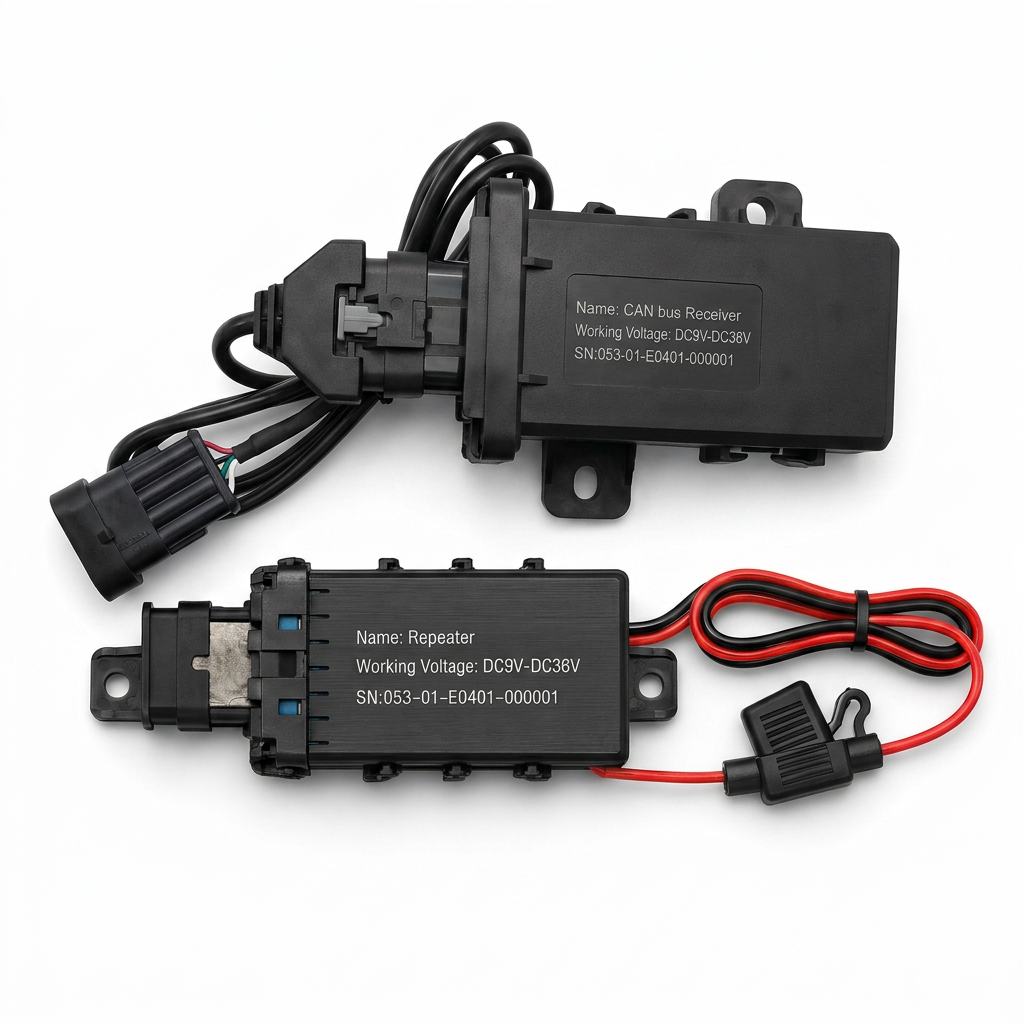
Integrated J1939 Tire Pressure Monitoring System
The Arvov CAN Bus TPMS solution combines wireless TPMS sensors, a signal repeater and a CAN Bus receiver. It is designed for OEM, retrofit and fleet projects that need reliable tire data integrated directly into the vehicle CAN network.
Each sensor measures tire pressure and temperature and transmits the data by 433.92 MHz RF. The receiver collects the information and sends it through the CAN Bus J1939 communication protocol to the vehicle network. Tire status and alerts can then appear on the original dashboard or another compatible display.
How the J1939 TPMS Integration Works
Wireless Tire Sensors
Internal valve, internal band-mounted or external sensors monitor tire pressure and temperature in real time.
Receiver and Repeater
The CAN receiver collects all wheel data, while the repeater strengthens signals on long vehicles and multi-axle configurations.
J1939 Dashboard Output
TPMS data is transmitted over the CAN Bus network for display and alert management on the original vehicle dashboard.
Key Features and Benefits
No Extra Monitor Required
Integrate pressure, temperature and warning data into the existing vehicle display for a cleaner installation.
Commercial Vehicle Coverage
Supports cars, race cars, trucks and buses with flexible wheel configurations from 4 to 18 tires.
Three Sensor Options
Compatible with internal valve sensors, internal band-mounted sensors and external cap sensors.
Fast App Pairing
Use the smartphone App to scan sensor IDs and pair sensors with the CAN Bus receiver.
Workshop-Friendly Setup
Wake up sensors and complete receiver pairing with the optional TPMS activation tool.
Trailer Exchange Support
Boost rear-vehicle sensor signals and enable smart trailer-swap applications for fleet operations.
Applications
- Heavy-duty trucks and multi-axle commercial vehicles
- City buses, coaches and school buses
- Truck and trailer combinations
- Special-purpose and off-highway vehicles
- Race cars and performance vehicles
- OEM dashboards and custom vehicle displays
- Fleet telematics and vehicle gateway projects
- Private-label TPMS systems
CAN Bus Receiver Specifications
| Working Voltage | DC 9V–36V vehicle power supply |
|---|---|
| Total Current | Less than 50 mA |
| Receive Frequency | 433.92 MHz ± 50 kHz |
| Receiving Sensitivity | Better than -105 dBm |
| Operating Temperature | -40°C to +85°C |
| Data Transmission | CAN Bus / J1939 protocol |
| High-Frequency Data Baud Rate | 10 Kbps |
| Data Encoding | Manchester encoding |
| Protection Rating | IP67 |
| Bluetooth Module | 2.4 GHz |
OEM and ODM CAN Bus TPMS Integration
Arvov supports customized CAN communication protocols, sensor firmware, receiver software and private-label requirements. Our engineering team can help match CAN identifiers, message formats, alarm thresholds, dashboard interfaces and vehicle-specific integration requirements.
For development, we can provide the communication protocol, receiver and sensor specifications, sample hardware and pairing guidance. Your software team can then integrate the TPMS interface into the vehicle dashboard or gateway and verify real-time pressure, temperature and alarm data.
Frequently Asked Questions
Does the system require a separate TPMS display?
No. The receiver can send tire data through the J1939 CAN Bus network so it can be shown on a compatible original dashboard or vehicle display.
How many wheels does the CAN Bus TPMS support?
The standard CAN Bus solution supports configurations from 4 to 18 wheels.
Which TPMS sensors can be used?
The system supports internal valve sensors, internal band-mounted sensors and external sensors.
Can Arvov customize the CAN Bus protocol?
Yes. CAN identifiers, data formats, software and sensor requirements can be customized for OEM, ODM and fleet integration projects.
Start Your CAN Bus TPMS Project
Tell us your vehicle type, wheel configuration, CAN protocol requirements and expected quantity. We will recommend the correct sensors, receiver, repeater and integration approach.