
RS232 & RS485 TPMS for Trucks, Buses and Fleets
Send real-time tire pressure, temperature and alarm data to GPS trackers, 4G gateways and fleet-management platforms through a simple serial communication protocol.
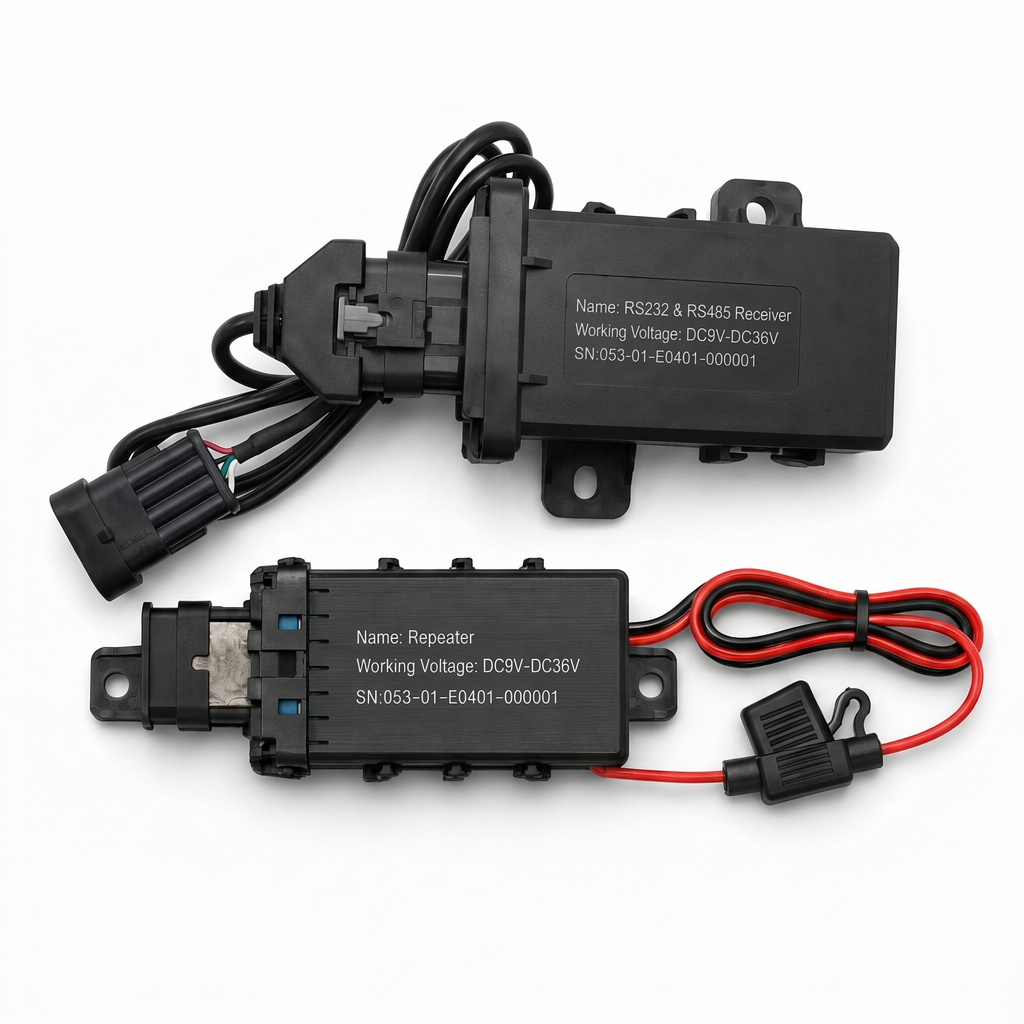
Integrated RS232 and RS485 Tire Pressure Monitoring System
The Arvov RS232 & RS485 TPMS solution is designed for vehicle manufacturers, GPS tracking providers, telematics companies and fleet operators that want tire data inside their own software—without installing a separate TPMS display.
Wireless TPMS sensors measure tire pressure and temperature and transmit the information to a compact receiver. The receiver converts the data into a structured RS232 or RS485 serial protocol for a GPS tracker, 4G gateway, vehicle terminal or industrial controller. Your platform can then display tire status, identify abnormal pressure or temperature and generate fleet alerts in real time.
How the RS232 & RS485 TPMS Solution Works
Wireless Tire Sensors
Internal valve, internal band-mounted or external sensors monitor pressure and temperature and send each wheel ID by 433.92 MHz RF.
Receiver and Repeater
The receiver collects all wheel data. A repeater strengthens the wireless signal for long vehicles, trailers and multi-axle configurations.
Serial Data to Your Platform
RS232 or RS485 output connects to a GPS tracker, 4G gateway or controller, which uploads TPMS data to your fleet-management platform.
Key Features and Benefits
Direct System Integration
Show tire information in your existing dashboard, telematics terminal or cloud platform instead of adding a separate monitor.
RS232 or RS485 Interface
Select the physical interface that matches your GPS hardware, industrial controller or vehicle gateway architecture.
Pressure and Temperature Warnings
Receive wheel ID, pressure, temperature, battery status and abnormal-condition data for fast fleet response.
Fleet Platform Connectivity
Integrate with compatible GPS trackers and use cellular gateways to send TPMS information to your private server or fleet platform.
Commercial Vehicle Design
A DC 9–36V receiver, wide operating-temperature range and IP67 protection support demanding vehicle environments.
Long Vehicle Signal Support
Improve sensor reception for truck-trailer combinations, buses and heavy-duty equipment with long wheel-to-receiver distances.
RS232 vs. RS485 for TPMS Integration
| RS232 | Simple point-to-point serial communication for short cable runs between the TPMS receiver and one GPS tracker or vehicle terminal. |
|---|---|
| RS485 | Differential serial communication with better noise immunity for longer cable runs and electrically demanding commercial-vehicle installations. |
| Communication Protocol | Arvov provides the TPMS data protocol so your engineers can parse sensor IDs, tire pressure, temperature and alarm status. |
| Customization | Message structure, baud rate, alarm logic, reporting requirements and gateway integration can be customized for OEM/ODM projects. |
Applications
- Truck and trailer fleet management
- City buses, coaches and school buses
- GPS tracking and telematics devices
- 4G vehicle gateways and private cloud platforms
- Agricultural machinery and tractors
- Earthmoving and construction equipment
- Mining and logging vehicles
- Industrial and special-purpose vehicles
- OEM dashboards and custom terminals
- Private-label TPMS projects
RS232 & RS485 Receiver Specifications
| Working Voltage | DC 9V–36V vehicle power supply |
|---|---|
| Total Current | Less than 50 mA |
| Receive Frequency | 433.92 MHz ± 50 kHz |
| Receiving Sensitivity | Better than -105 dBm |
| Operating Temperature | -40°C to +85°C |
| Data Interface | RS232 or RS485 serial output |
| High-Frequency Data Rate | 10 Kbps |
| RF Data Encoding | Manchester encoding |
| Protection Rating | IP67 |
| Bluetooth Module | 2.4 GHz |
OEM and ODM Fleet Platform Integration
Arvov supports customized communication protocols, receiver firmware, sensor software, alarm thresholds and private-label requirements for RS232 and RS485 TPMS projects.
For development, we can provide the serial communication protocol, receiver and sensor specifications, sample hardware and pairing guidance. Your engineering team can connect the receiver to the GPS tracker or vehicle gateway, parse the TPMS messages and upload pressure, temperature and alarm data to your platform. We can also discuss regional 4G gateway requirements, private APN applications and event-based emergency reporting.
Frequently Asked Questions
Does this TPMS solution require a separate display?
No. The receiver sends TPMS data through RS232 or RS485 to your existing GPS tracker, gateway, dashboard or fleet platform.
What tire data can be transmitted?
The protocol can provide sensor ID, tire pressure, temperature, battery or status information and warning conditions for each configured wheel.
Can the receiver work with our GPS tracker?
Yes, if your tracker has a compatible RS232 or RS485 input and your software team implements the Arvov communication protocol. Customized protocol support is also available.
When should we choose RS485 instead of RS232?
RS485 is generally preferred for longer cable runs and installations that need higher resistance to electrical noise. RS232 is practical for a short, direct point-to-point connection.
Can Arvov customize the hardware and protocol?
Yes. We support OEM/ODM projects including communication messages, firmware, connectors, cable specifications, branding and sensor configuration.
Start Your RS232 or RS485 TPMS Project
Tell us your vehicle type, wheel count, GPS tracker model, required serial interface and expected quantity. We will recommend the correct sensors, receiver, repeater and integration method.