
Public Transport Tire Safety
Bus TPMS for 6-Wheel Public Transport Fleets
Monitor tire pressure, temperature and critical alarms for six bus wheels in real time. Arvov Bus TPMS combines an in-cab display, RS232 and RS485 data output, smartphone App pairing and durable wireless sensors for safer, more connected bus fleet operations.
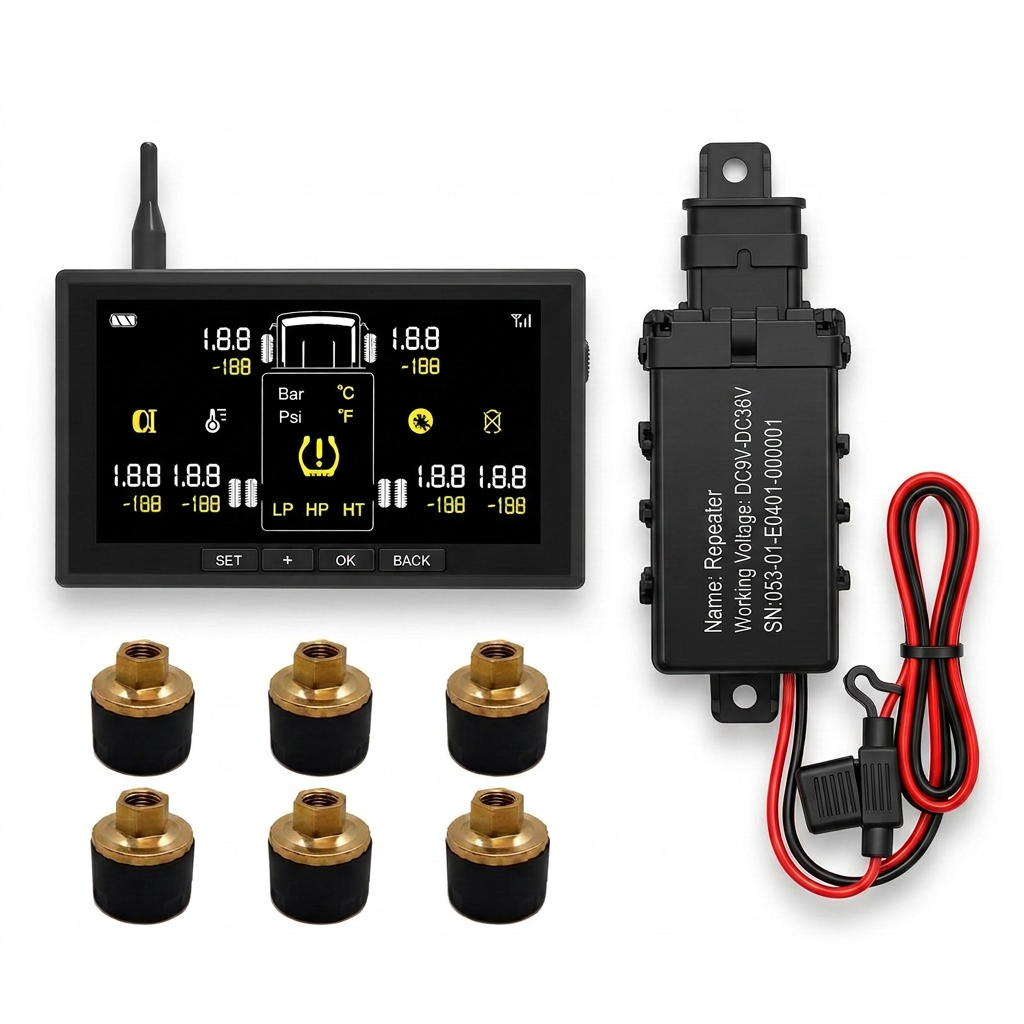
Real-Time Tire Pressure Monitoring for Buses
The Arvov Bus TPMS is designed for public transport buses, school buses, shuttle buses, coaches and other six-wheel commercial vehicles. Wireless sensors measure tire pressure and temperature at each wheel, while the display shows all six positions on one screen. When pressure or temperature moves outside the configured limits, the system provides an immediate visual and audible warning so drivers and fleet teams can respond before a tire issue becomes a roadside failure.
Wheel Monitoring
View pressure and temperature data for six tires on one clear in-cab display.
Sensor Options
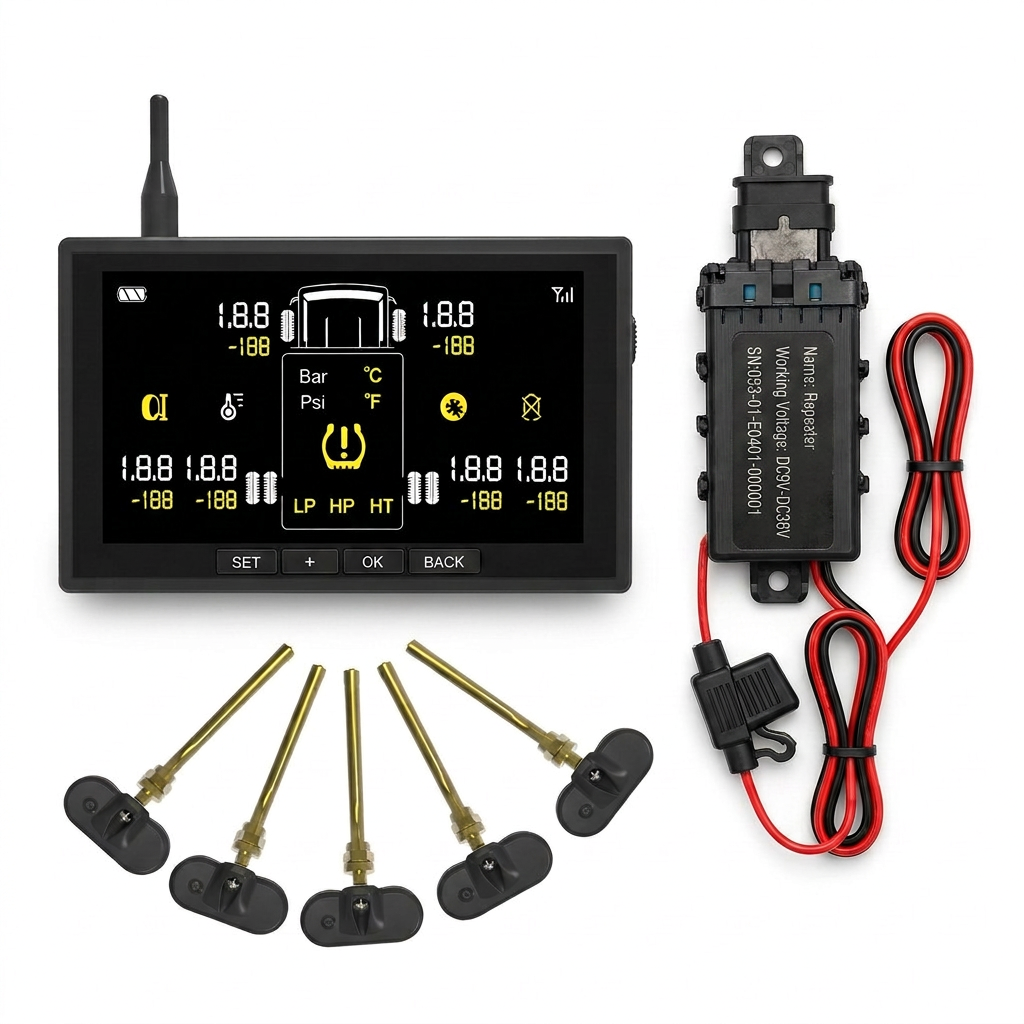
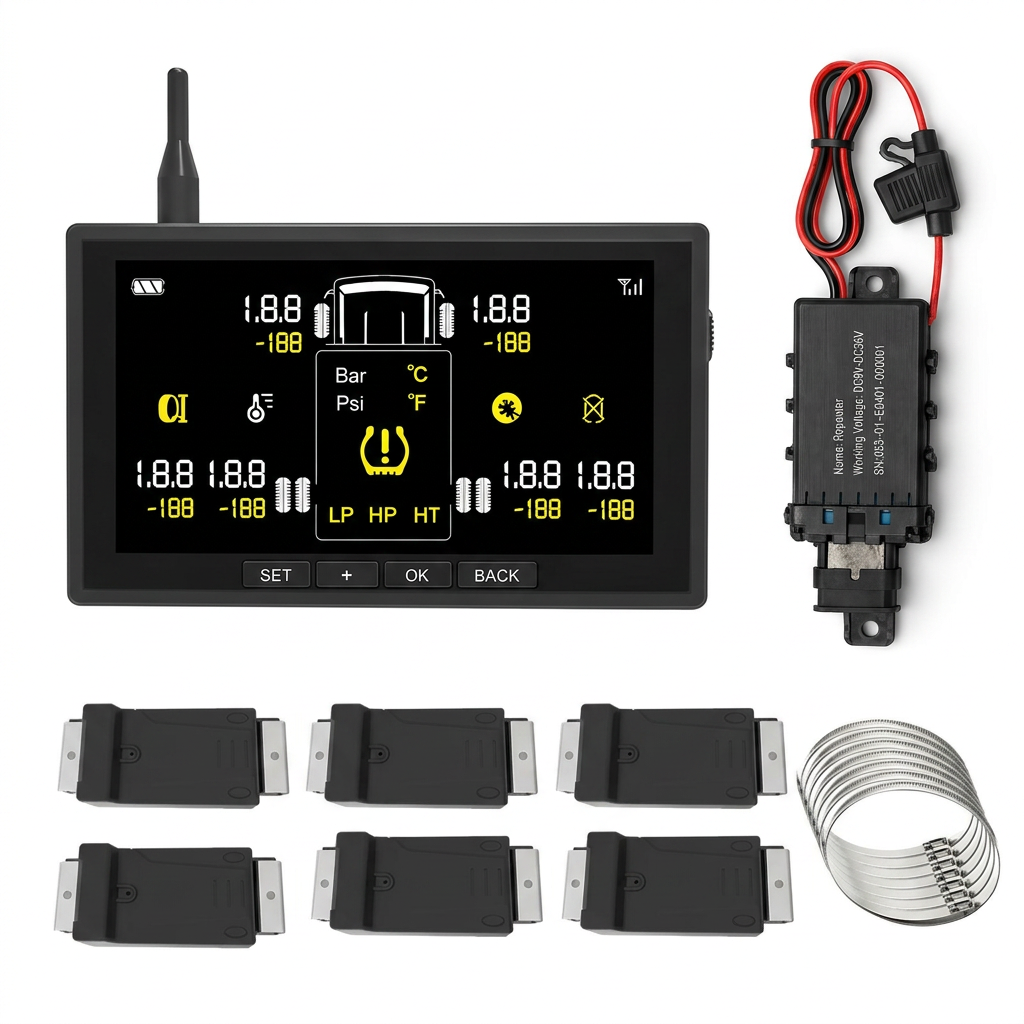
Choose internal banded, internal valve or external sensors for different rims and maintenance needs.
Critical Alarms
Receive warnings for low pressure, high pressure, high temperature and tire leakage.
Firmware Updates
Update compatible display firmware for product maintenance and qualified customization projects.
Bus TPMS Product Images
Select the sensor installation method that fits the bus wheel, tire construction and service workflow. Both configurations use the same six-wheel monitor and long-range repeater architecture.
Key Features of the Bus TPMS
RS232 and RS485 Output
Transmit tire pressure, temperature, sensor ID and alarm data to a compatible GPS tracker, 4G gateway or telematics device. See the RS232 & RS485 TPMS Solution for integration details.
Fleet Platform Integration
Use the communication protocol to connect TPMS data with a compatible fleet management platform, helping operators monitor tire conditions beyond the driver display.
Bluetooth App Pairing
Scan sensor IDs with the smartphone App and pair each sensor with its wheel position. Compatible display firmware can also be maintained through OTA updates.
Sensor Activation Tool
Use the optional activation tool to wake sensors and pair them with the display during installation, replacement or fleet maintenance.
Long-Range RF Transmission
The 433.92 MHz wireless sensors and repeater support stable signal transmission across the length of a commercial bus.
Automotive-Grade Components
Vehicle-grade TPMS chipsets and batteries are selected for stable performance, wide operating temperatures and long service life.
How the Bus Tire Pressure Monitoring System Works
The system creates a practical data path from every bus tire to the driver and, when required, to a connected fleet platform.
Install the Sensors
Fit internal banded, internal valve or external sensors according to the bus rim, tire and service requirements.
Pair Each Wheel
Scan sensor IDs with the smartphone App or use the activation tool to assign every sensor to the correct wheel position.
Monitor in Real Time
The display receives pressure and temperature data for all six wheels and warns the driver when an abnormal condition appears.
Send Data to the Platform
RS232 or RS485 output transfers TPMS information to a compatible GPS, 4G or telematics device for fleet-side monitoring.
Sensor Options for Bus Fleets
Internal Banded Sensor
Mounted securely inside the wheel with a band, this option is protected from external impact and suits many heavy-duty wheel structures.
Internal Valve Sensor
Replaces the tire valve and measures pressure and temperature from inside a compatible tubeless bus tire.
External Sensor
Installs directly on the valve for fast fleet retrofit, convenient inspection and easy sensor replacement.
- Public transport and city buses
- School buses and student transport
- Airport and hotel shuttle buses
- Intercity coaches and tour buses
- Employee and factory transport fleets
- Six-wheel commercial service vehicles
Bus TPMS Technical Specifications
| Wheel Capacity | 6 wheels |
|---|---|
| Communication Output | RS232 and RS485 |
| Sensor Battery | Internal sensor: CR2450, 550 mAh; external sensor: CR1632, 130 mAh |
| Radio Frequency | 433.92 MHz ± 38 kHz |
| Standby / Emission Current | <0.7 μA / <10 mA |
| Transmission Power | <8 dBm (50 Ω) |
| RF Modulation | FSK |
| Low-Frequency Activation | 125 kHz ± 5 kHz, ASK |
| Pressure Range | 0-16 Bar (0-232 PSI) |
| Pressure Resolution | 2.75 kPa |
| Pressure Accuracy | ±0.2 Bar at 0-70°C; ±0.3 Bar at -20-85°C; ±0.48 Bar at -40-125°C |
| Temperature Range / Resolution | -40°C to 125°C / 1°C |
| Temperature Accuracy | ±3°C at 0-70°C |
| Operating / Storage Temperature | -40°C to 125°C |
| Protection Rating | IP67 |
| Expected Battery Life | Internal sensor: more than 8-10 years; external sensor: approximately 1-2 years |
Battery life varies with transmission frequency, alarm activity, use conditions and operating environment.
OEM and ODM Bus TPMS Support
Arvov supports customized Bus TPMS projects for bus manufacturers, public transport operators, distributors and fleet solution providers.
Communication Protocol
Integrate pressure, temperature, sensor ID and alarm data through RS232 or RS485. Protocol customization can be evaluated for qualified projects.
System Configuration
Select the display, sensor type, repeater and communication interface according to the bus design and fleet operating model.
Brand Customization
OEM logo, packaging, interface and private-label options are available according to project quantity and technical requirements.
Bus TPMS FAQ
How many wheels can this Bus TPMS monitor?
This model displays pressure and temperature data for six wheels on one screen, making it suitable for common six-wheel buses and commercial vehicles.
Can TPMS data be sent to a fleet platform?
Yes. The display supports RS232 and RS485 output for connection with a compatible GPS tracker, 4G gateway or telematics device. The receiving device and platform software must be configured according to the communication protocol.
Which alarms does the Bus TPMS provide?
The system supports low-pressure, high-pressure, high-temperature and tire-leakage warnings so the driver can respond to abnormal tire conditions.
Which sensor type is best for a bus?
Internal banded and internal valve sensors provide protected installation for compatible wheels. External sensors support quick retrofit and convenient maintenance. The best choice depends on the rim, tire, valve and fleet service process.
How are sensors paired with the display?
Sensor IDs can be scanned with the smartphone App or paired using the optional TPMS activation tool.
Can Arvov customize the Bus TPMS?
Yes. OEM and ODM options may include RS232 or RS485 protocol work, display firmware, hardware combinations, branding and packaging, subject to technical review.
Build the Right Bus TPMS for Your Fleet
Tell us the bus model, wheel quantity, sensor preference and RS232 or RS485 integration requirements. Our team will recommend a practical system configuration.