
Universal TPMS sensors are programmable replacement sensors that can cover many vehicle applications, while OEM TPMS sensors are selected for specific makes, models, model years, and original system requirements. The better choice depends on exact vehicle compatibility, available programming tools, service workflow, and inventory strategy.
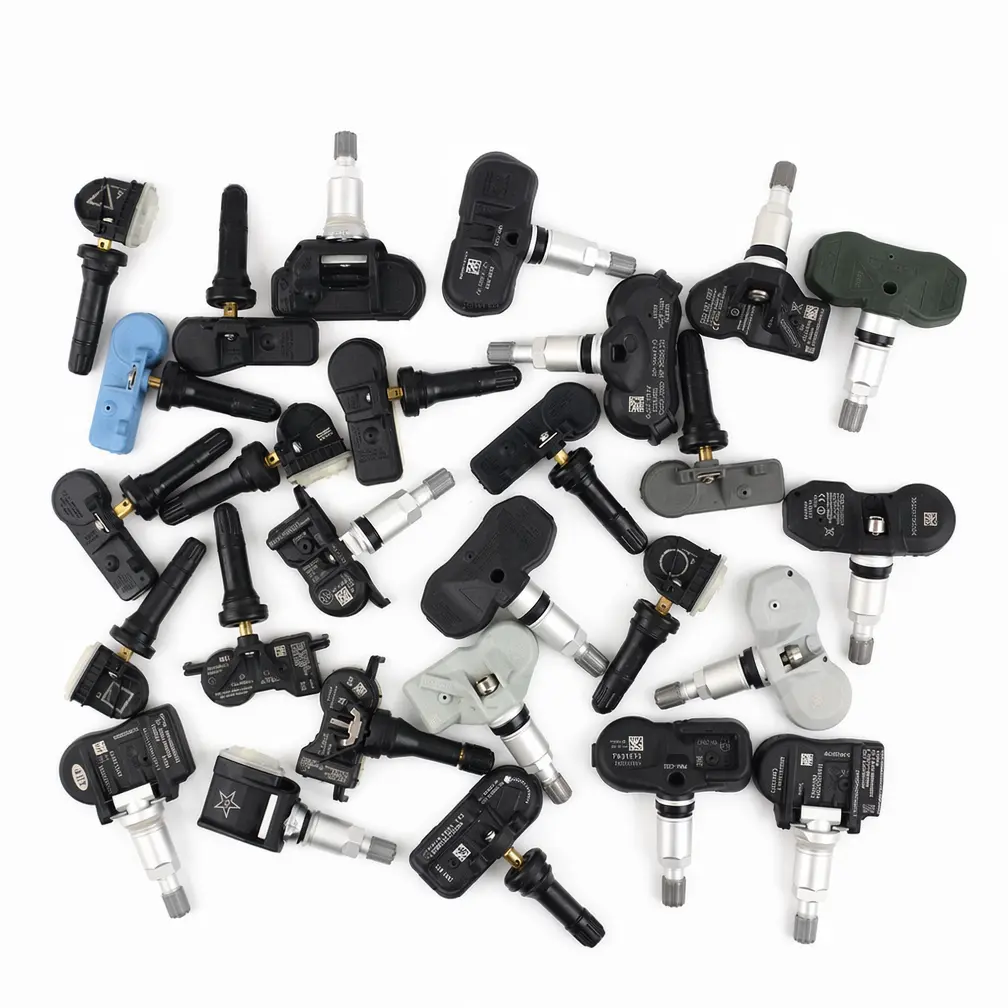
Universal vs OEM TPMS sensors at a glance
| Comparison | Universal TPMS sensor | OEM TPMS sensor |
|---|---|---|
| Vehicle coverage | Can support many applications after correct programming | Designed for defined vehicle applications |
| Preparation | Requires a compatible programming tool and software coverage | Selected by vehicle fitment or part number |
| Inventory | Fewer sensor SKUs may cover more vehicles | More part numbers may be needed for broad coverage |
| Relearn | Vehicle relearn may still be required after programming and installation | Vehicle relearn may be required after installation |
| Best suited for | Workshops, distributors, and mixed vehicle coverage | Vehicle-specific replacement and defined OEM applications |
| Compatibility check | Confirm vehicle, frequency, protocol, tool, and software version | Confirm exact make, model, year, region, and part number |
What are universal TPMS sensors?
A universal TPMS sensor is a programmable replacement sensor. Before installation, it must be configured with a compatible TPMS programming tool for the required vehicle application. Depending on the service method, a technician may create a new sensor ID or copy an existing ID when the vehicle and tool support that workflow.
One universal sensor platform can cover many applications when the correct software coverage, radio frequency, valve configuration, and programming procedure are available. This can help workshops and distributors reduce the number of separate sensor SKUs held in stock.
Advantages of universal sensors
- Broad programmed coverage: one sensor platform can serve multiple compatible applications.
- Lower inventory pressure: fewer sensor types may cover a wider range of vehicles.
- Flexible service workflow: technicians can program the required application when the vehicle arrives.
- Private-label opportunity: qualified suppliers can discuss branding, coverage, and packaging for distributors.
Limitations of universal sensors
- Programming must be completed correctly before installation.
- Coverage depends on the sensor, programming tool, and current software database.
- Exact make, model, model year, region, frequency, and valve fitment must be checked.
- A vehicle-specific relearn procedure may still be required.
What are OEM TPMS sensors?
OEM-style TPMS sensors are designed for defined vehicle applications and original system requirements. They are normally selected by vehicle fitment or part number, including the required radio frequency, communication protocol, mechanical design, and valve type.
Advantages of OEM sensors
- Vehicle-specific selection: the sensor is matched to a defined application.
- Established fitment: the correct part number aligns with the intended system and mechanical requirements.
- Suitable for specialized applications: useful where vehicle requirements are complex or universal coverage is unavailable.
Limitations of OEM sensors
- Each part number covers a narrower set of vehicles.
- Distributors may need more SKUs to cover a broad market.
- Older or discontinued vehicle applications may be harder to source.
Which TPMS sensor should you choose?
Choose a universal TPMS sensor when verified coverage, efficient inventory, and an established programming workflow are priorities. Choose an OEM sensor when a vehicle-specific part number is required, universal coverage is unavailable, or the application has specialized fitment or protocol requirements.
Neither category guarantees compatibility by name alone. Before ordering, confirm the exact vehicle, model year, market region, frequency, protocol, valve type, programming tool, software version, and relearn procedure. This check is more reliable than choosing only by price or by a general “universal” or “OEM” label.
Need help selecting a TPMS sensor?
Send Arvov the vehicle list, target market, expected quantity, programming-tool requirement, and private-label needs. The team can review the appropriate OEM-style or universal sensor approach.
FAQ
Do universal TPMS sensors fit every vehicle?
No. Coverage depends on the sensor platform, programming tool, software version, vehicle market, frequency, protocol, and mechanical fitment.
Do universal TPMS sensors need programming?
Yes. A compatible programming tool is required to configure the sensor for the selected vehicle application before installation.
Do OEM TPMS sensors need relearning?
They may. The relearn process depends on the vehicle. Some vehicles relearn automatically, while others require a manual procedure or diagnostic tool.
Which option is better for a repair workshop?
Universal sensors can reduce inventory when the workshop has a compatible tool and verified coverage. OEM sensors remain useful for vehicle-specific applications or models not supported by the universal system.
Related resources: Explore TPMS products, compare internal and external TPMS sensors, or contact Arvov for compatibility support.