
Short answer: Internal TPMS sensors are generally the better choice for long-term use, higher pressure accuracy and stronger protection. External TPMS sensors are easier to install and maintain. Both monitor tire pressure and temperature to provide early warning of abnormal conditions, helping drivers take timely action and reduce tire blowout risk.
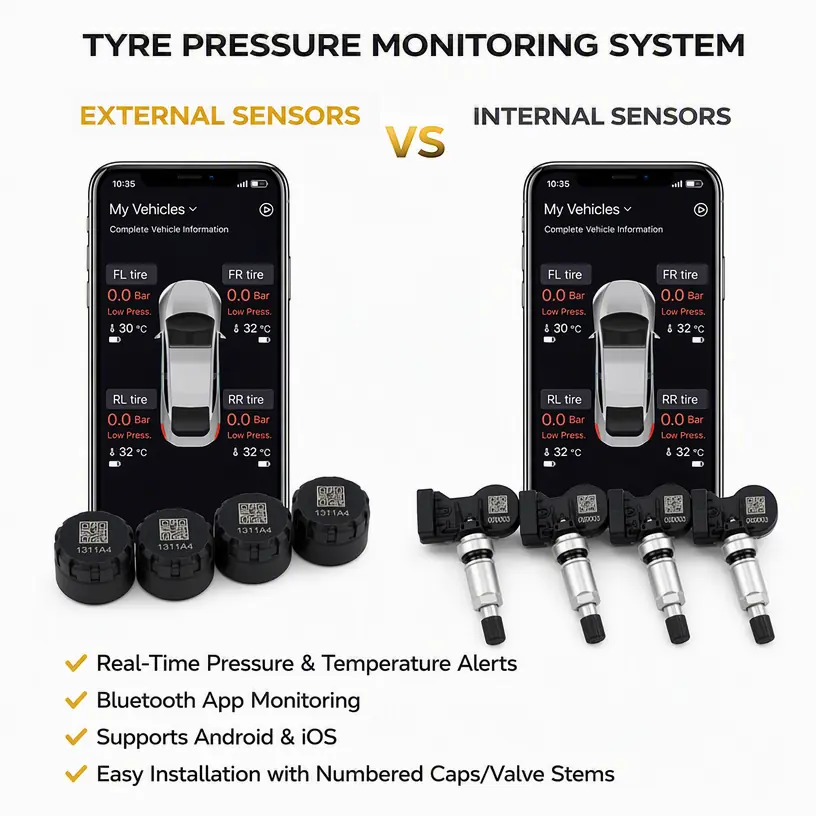
When adding or replacing a tire pressure monitoring system, one of the first decisions is whether to use external TPMS sensors or internal TPMS sensors. Both types can monitor tire pressure and temperature, but they differ in installation, pressure accuracy, environmental protection, maintenance and total ownership cost.
A TPMS cannot prevent every tire blowout. It provides early warning of abnormal tire pressure and temperature so the driver can inspect the tire and take timely action. This helps reduce the risk of blowouts associated with underinflation, overinflation or excessive tire temperature, but it does not replace regular tire inspections.
Internal vs External TPMS Sensors: Quick Comparison
| Comparison | External TPMS Sensors | Internal TPMS Sensors |
|---|---|---|
| Installation | Screw onto the tire valve; usually suitable for quick DIY installation | Installed inside the tire; tire removal and professional installation are normally required |
| Pressure accuracy | Reliable for daily monitoring, but the reading can be influenced by the valve connection and installation condition | Generally provides higher actual pressure measurement accuracy because pressure is measured directly inside the tire |
| Temperature monitoring | More affected by ambient temperature because the sensor is outside the tire | Better reflects temperature conditions inside the tire |
| Protection | Exposed to water, dirt, road debris, impact and possible theft | Protected inside the tire from weather, external impact and theft |
| Maintenance | Battery access and sensor replacement are usually easier | Tire removal may be required when the sensor needs service or replacement |
| Best suited for | Fast aftermarket installation, occasional use and budget-conscious applications | Long-term use, highway driving, OEM replacement and users prioritizing accuracy and protection |
What Are External TPMS Sensors?
External TPMS sensors are mounted on the outside of the tire valve. Installation usually takes only a few minutes and does not require tire removal or wheel balancing. This makes them practical for vehicles that were not originally equipped with direct TPMS, as well as for drivers who want a simple aftermarket monitoring solution.
Advantages of External TPMS Sensors
- Easy installation: The sensors can normally be installed without removing the tire.
- Lower initial installation cost: Professional tire service is usually unnecessary.
- Convenient maintenance: On supported designs, the battery can be replaced without removing the tire.
- Flexible aftermarket use: They are suitable for many cars, motorcycles, trailers and other compatible vehicle applications.
Limitations of External TPMS Sensors
Because external TPMS sensors are exposed, they are more vulnerable to water, mud, road debris, corrosion, accidental impact and theft. The sensor should be installed correctly with the supplied sealing components and checked for air leakage after installation.
External temperature readings are also more affected by ambient conditions because the sensor is outside the tire. Battery life is commonly around one to two years, but the actual service interval depends on the sensor design, battery type, transmission frequency, climate and vehicle usage. The sensor must normally be removed before inflating the tire, so careful handling is important.
What Are Internal TPMS Sensors?
Internal TPMS sensors are mounted inside the tire. Compared with external TPMS sensors, internal TPMS sensors generally provide higher actual pressure measurement accuracy because they measure pressure directly inside the tire and are less affected by the valve connection and external environment. Their temperature readings also better reflect conditions within the tire.
The tire protects the sensor from weather, dirt, impact and theft. Internal designs can also accommodate a larger battery in many applications, although service life always depends on the specific product, transmission strategy and operating conditions. Most factory-installed direct TPMS systems use internal sensors, making this the common solution for OEM replacement and long-term vehicle use.
Advantages of Internal TPMS Sensors
- Higher pressure accuracy: The sensor measures pressure directly inside the tire.
- More representative temperature data: The reading is less affected by the outside air.
- Better physical protection: The sensor is protected inside the wheel assembly.
- Suitable for long-term use: Internal sensors are a strong choice for daily vehicles, highway driving and OEM replacement.
Limitations of Internal TPMS Sensors
Installation normally requires tire removal, professional equipment and wheel balancing, which increases labor cost. When the battery is depleted or the sensor is damaged, the tire may need to be removed again. Correct installation is important because an incorrectly fitted sensor or valve can cause air leakage, wheel imbalance or damage during tire mounting.
Which TPMS Sensor Type Should You Choose?
Choose External TPMS Sensors If:
- You want fast installation without removing the tire.
- You prefer a lower upfront installation cost.
- The vehicle is used occasionally or the system is intended as a flexible aftermarket solution.
- You want easier access for sensor or battery maintenance.
Choose Internal TPMS Sensors If:
- You prioritize higher actual pressure measurement accuracy.
- You drive frequently on highways or over long distances.
- You want the sensor protected from weather, impact and theft.
- You need to replace a damaged OEM tire pressure sensor.
- You plan to keep the system on the vehicle for long-term use.
For smartphone-based monitoring, review the Arvov Bluetooth TPMS Sensor options. For vehicle-specific monitoring, see the Car TPMS page, or compare the full Arvov TPMS product range.
Installation and Maintenance Tips
- Use the pressure range recommended by the vehicle or tire manufacturer.
- For external TPMS sensors, verify the sealing washer, anti-theft nut and valve connection, then check for leakage.
- For internal TPMS sensors, use a qualified tire shop and rebalance the wheel after installation.
- Confirm that every sensor is paired with the correct tire position.
- Continue routine tire inspections for tread damage, valve condition, punctures and abnormal wear.
- Check the expected battery and service life for the exact sensor model; see How Long Do TPMS Sensors Last? for the main factors.
Conclusion
External TPMS sensors are the practical choice when fast installation, lower initial cost and convenient maintenance matter most. Internal TPMS sensors are usually preferable for long-term use, higher pressure accuracy, better temperature representation and stronger protection. The best choice depends on the vehicle, driving conditions, installation capability and maintenance plan.
Need help selecting the right sensor? Contact the Arvov team with your vehicle type, tire quantity, sensor preference and monitoring requirements for a suitable recommendation.
Frequently Asked Questions
Are internal TPMS sensors more accurate than external TPMS sensors?
Generally, yes. Internal TPMS sensors usually provide higher actual pressure measurement accuracy because they measure pressure directly inside the tire and are less affected by the valve connection and external environment.
Can TPMS prevent a tire blowout?
A TPMS cannot prevent every blowout. It provides early warning of abnormal tire pressure and temperature, helping the driver take timely action and reduce the risk of blowouts associated with pressure or temperature problems.
How long do external TPMS sensor batteries last?
External TPMS sensor batteries commonly last around one to two years, but the actual life depends on the sensor design, battery type, transmission frequency, climate and vehicle usage.
Do internal TPMS sensors require professional installation?
In most cases, yes. The tire must normally be removed, the sensor installed correctly and the wheel rebalanced by a qualified tire service provider.
Do external TPMS sensors need to be removed when inflating a tire?
Usually, yes. External TPMS sensors are mounted on the valve, so they normally need to be removed before adding air and reinstalled carefully afterward.