
BLE SENSOR AND PLATFORM INTEGRATION
Bluetooth TPMS Sensors for Cars, Trucks and Fleets
2.4 GHz BLE tire pressure sensors for smartphone applications, gateways and fleet platforms, with passive broadcast options, protocol support and car or truck configurations.
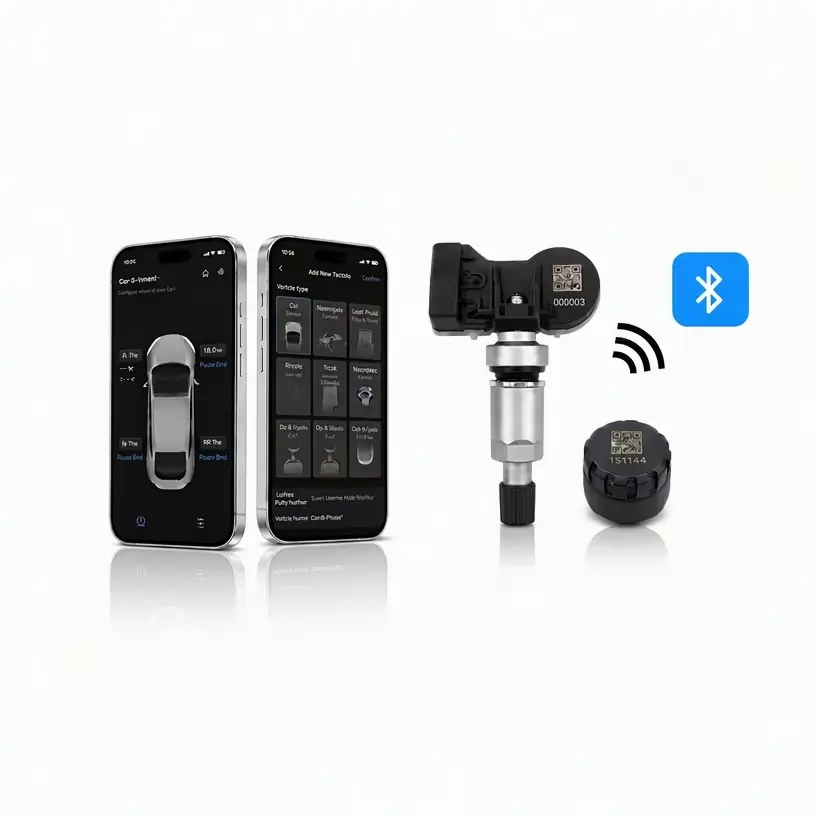
Bluetooth TPMS Sensor and Integration Overview
ARVOV supplies Bluetooth TPMS sensors for vehicle monitoring and data integration. A project can connect sensors directly to a smartphone App, through a BLE gateway to a fleet platform, or through a BLE/CAN receiver to the vehicle CAN network.
Sensor Options
Internal External and Band Sensors
Select valve internal, band internal or external sensors according to the wheel, pressure range and installation environment.
Receiver Options
Gateway and CAN Integration
Receive BLE advertising data through compatible smartphones, gateways or BLE/CAN receiver hardware.
Software Support
Protocol SDK and API Evaluation
Protocol documentation, SDK or API support can be evaluated according to the customer App, gateway and backend architecture.
Car and Truck Bluetooth TPMS Sensor Comparison
Passenger-car and commercial-vehicle specifications are separated so pressure ranges and battery expectations are not mixed.
| Specification | Car BLE Sensor | Truck BLE Sensor |
|---|---|---|
| Pressure Range | 0–8 bar / 0–116 PSI | 0–16 bar / 0–232 PSI |
| Typical Application | Passenger cars | Trucks, buses and trailers |
| Internal Battery Life | 3–5 years | 8–10 years |
| External Battery Life | 1–2 years | 1–2 years |
| Communication | 2.4 GHz BLE | 2.4 GHz BLE |
| Operating Temperature | −40°C to +85°C | −40°C to +85°C |
| Pressure Accuracy | ±0.1 bar at 0°C to +85°C | ±0.1 bar at 0°C to +85°C |
Passive BLE Broadcasting Without Traditional Pairing
Compatible BLE TPMS sensors can transmit advertising packets that a smartphone or gateway scans without traditional one-to-one pairing. Multiple sensors can broadcast simultaneously, making the architecture suitable for GPS trackers, BLE gateways and fleet data collection.
Pairing-Free Advertising
Confirmed models or projects can use passive BLE advertising. The receiver scans the available packets rather than maintaining a traditional paired connection.
Multi-Sensor Reception
A compatible gateway can receive broadcasts from multiple nearby sensors and associate sensor IDs with vehicle wheel positions.
Compatibility Confirmation
Smartphone, tracker and gateway compatibility must be confirmed for each integration. Proprietary packet details are not published on the page.
Bluetooth TPMS Data Update Intervals
The approved reporting behavior balances abnormal-condition response with battery life.
| Vehicle State | Approved Update Interval |
|---|---|
| Tire Pressure Abnormal Condition | 10 seconds |
| Tire Pressure Normal Driving | 3 minutes |
| Tire Pressure Normal Parked | 10 minutes |
Any customized reporting interval is subject to project requirements and technical confirmation.
Bluetooth TPMS Integration Architecture
Choose an integration path according to whether the project needs a smartphone interface, a fleet platform or vehicle CAN data.
1
Sensor to Smartphone App
Use the TireKing App or evaluate a customer-owned App integration for compatible sensors and mobile devices.
2
Sensor to BLE Gateway to Fleet Platform
A compatible gateway scans BLE advertising packets and forwards tire data to the customer platform or backend.
3
Sensor to BLE CAN Receiver to Vehicle CAN
A compatible receiver collects sensor data and sends the approved data definition to the vehicle CAN network.
Internal External and Band BLE Sensor Options
Choose the installation method according to the rim, tire, servicing requirements and vehicle type.
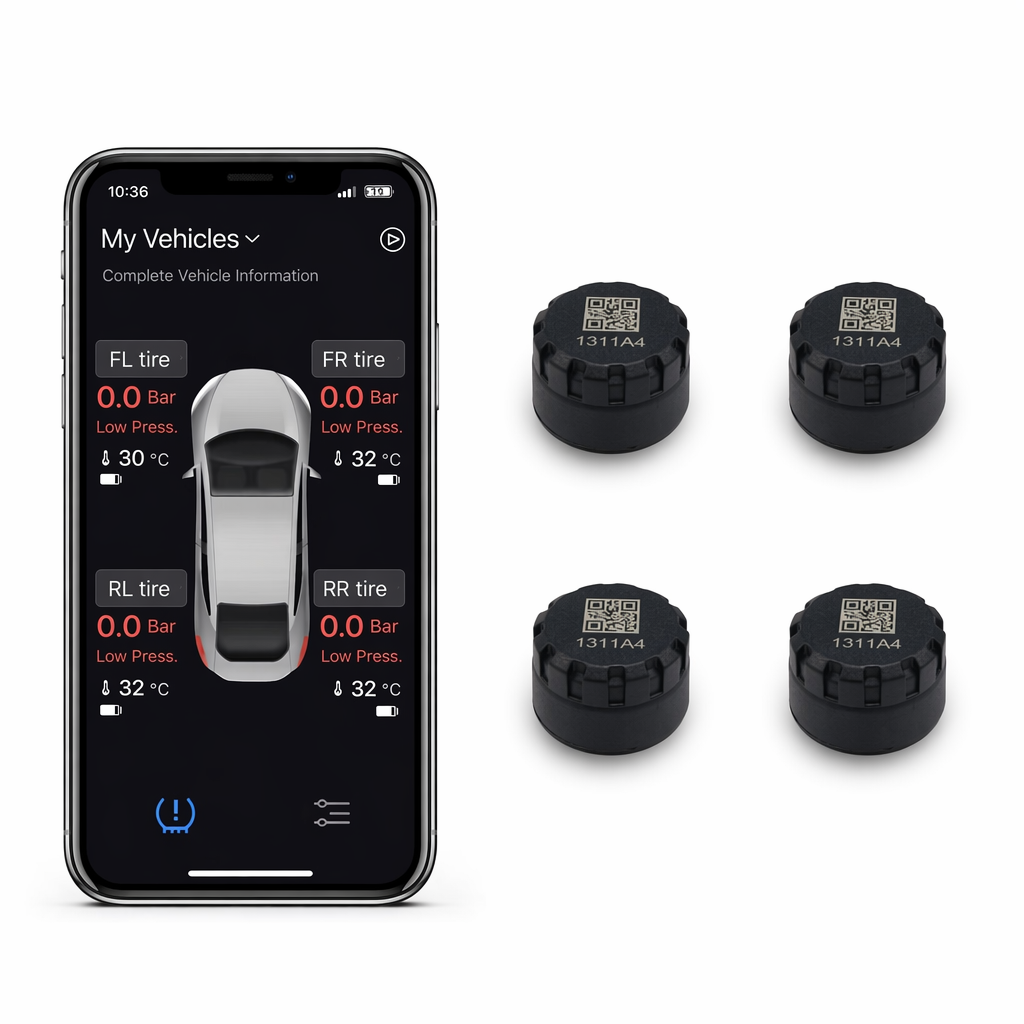
Fast valve-cap installation and convenient replacement for compatible retrofit applications.
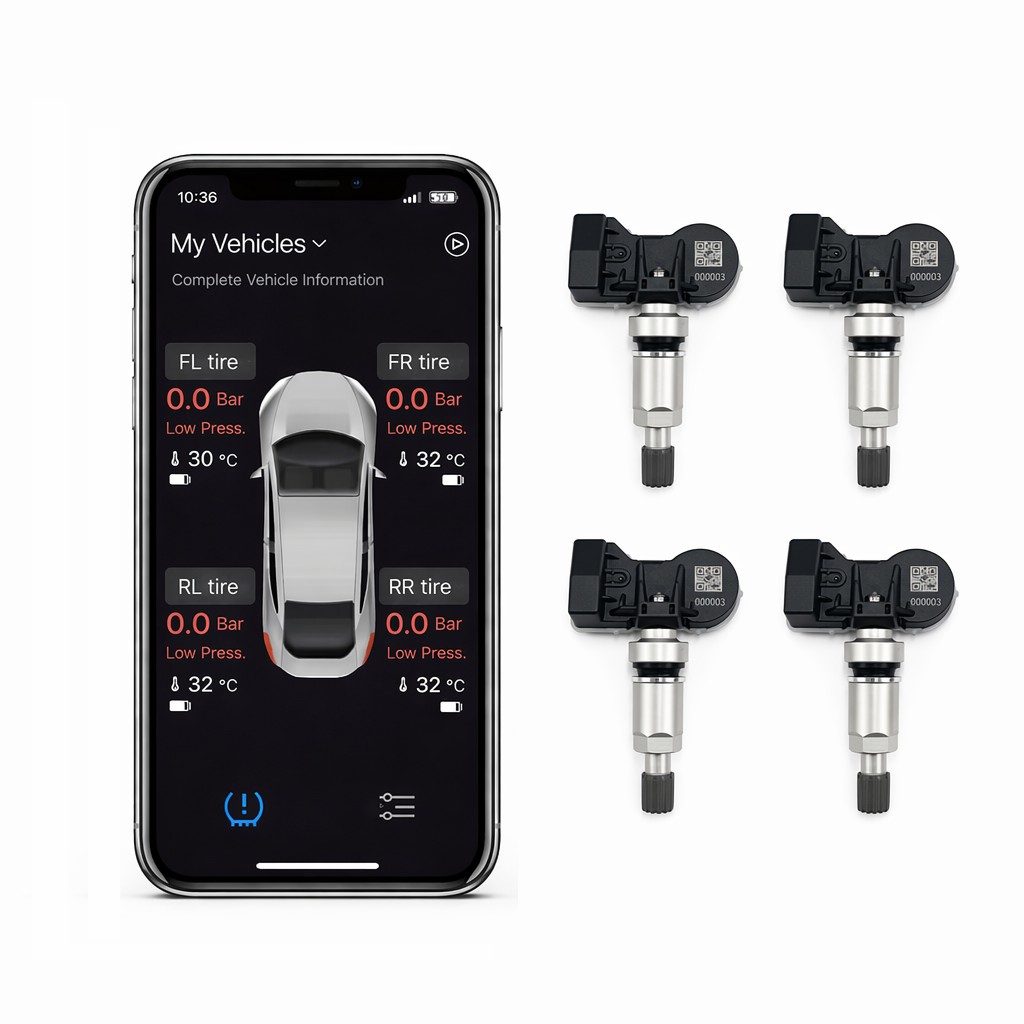
Protected installation inside the tire for passenger-car and commercial-vehicle applications.
Band Internal Sensor
Protected Rim Installation
Band-mounted BLE sensors are available for projects where a valve-mounted design is not preferred. Suitability must be confirmed against rim and installation requirements.
BLE TPMS Customization and Receiver OTA
Customization is evaluated according to project volume, hardware architecture and technical requirements.
Custom BLE MAC and Advertising Packet
Custom MAC addressing and advertising packet requirements can be evaluated for qualified integration projects.
Protocol SDK and API Support
ARVOV can evaluate protocol documentation, SDK, API and parsing support for the customer App, gateway or platform.
Receiver OTA
OTA is supported by the compatible receiver. It is not a display function and must not be described as a capability of every BLE sensor.
App Branding
App interface and branding requirements can be reviewed for qualified OEM and ODM programs.
Gateway Integration
Receiver and gateway integration can be evaluated for GPS trackers, telematics devices and fleet platforms.
Project Confirmation
Customized development remains subject to hardware, firmware, protocol and project confirmation.
Bluetooth TPMS Technical Specifications
| Bluetooth Frequency | 2.4 GHz BLE |
|---|---|
| Car Sensor Pressure Range | 0–8 bar / 0–116 PSI |
| Truck Sensor Pressure Range | 0–16 bar / 0–232 PSI |
| Pressure Accuracy | ±0.1 bar at 0°C to +85°C |
| Operating Temperature | −40°C to +85°C |
| Car Internal Battery Life | 3–5 years |
| Truck Internal Battery Life | 8–10 years |
| External Battery Life | 1–2 years |
| Sensor Options | Internal valve, band internal and external |
| Receiver OTA | Supported by the compatible receiver, not the display |
Battery life varies with usage, reporting frequency, alarm activity and operating environment.
For a conventional commercial-vehicle system, explore the 433 MHz truck TPMS system. For trailer monitoring and smart repeater applications, see the trailer TPMS system for automatic trailer exchange.
FREQUENTLY ASKED QUESTIONS
Bluetooth TPMS Sensor FAQ
Does the BLE sensor require pairing?
Confirmed passive-broadcast models or projects can advertise data without traditional one-to-one pairing. App-based configurations may use their own setup or wheel-position association process.
Can multiple sensors broadcast simultaneously?
Yes. Compatible receivers or gateways can scan broadcasts from multiple sensors and associate the sensor IDs with the vehicle or wheel positions.
Do you provide an SDK or communication protocol?
Protocol documentation, SDK or API support can be evaluated according to the customer App, gateway and backend architecture. These materials are not presented as unrestricted public downloads.
Can the BLE MAC address be customized?
Custom BLE MAC requirements can be evaluated for qualified projects after technical confirmation.
Can BLE TPMS work with GPS trackers?
Yes, when the GPS tracker or connected gateway supports the required BLE scanning and protocol. Compatibility must be confirmed for the selected hardware.
What are the broadcast intervals?
The approved intervals are 10 seconds during an abnormal pressure condition, 3 minutes during normal driving and 10 minutes while parked.
Is OTA available for the BLE TPMS solution?
OTA is supported by the compatible receiver, not the display. OTA must not be described as a standard capability of every BLE sensor.
What is the difference between car and truck BLE sensors?
Car sensors use a 0–8 bar range and typically provide 3–5 years of internal battery life. Truck sensors use a 0–16 bar range and typically provide 8–10 years of internal battery life.
Are internal external and band sensors available?
Yes. Internal valve, band internal and external sensor options are available, subject to vehicle, rim and project confirmation.
What data can the BLE TPMS sensor transmit?
Depending on the confirmed model and protocol, available fields can include pressure, temperature, sensor ID, battery-related information and status or alarm data.
PROJECT INQUIRY
Build Your Bluetooth TPMS Integration
Tell us the vehicle type, sensor option, wheel quantity, gateway or receiver and required data interface. Our team will review the correct BLE TPMS configuration.