
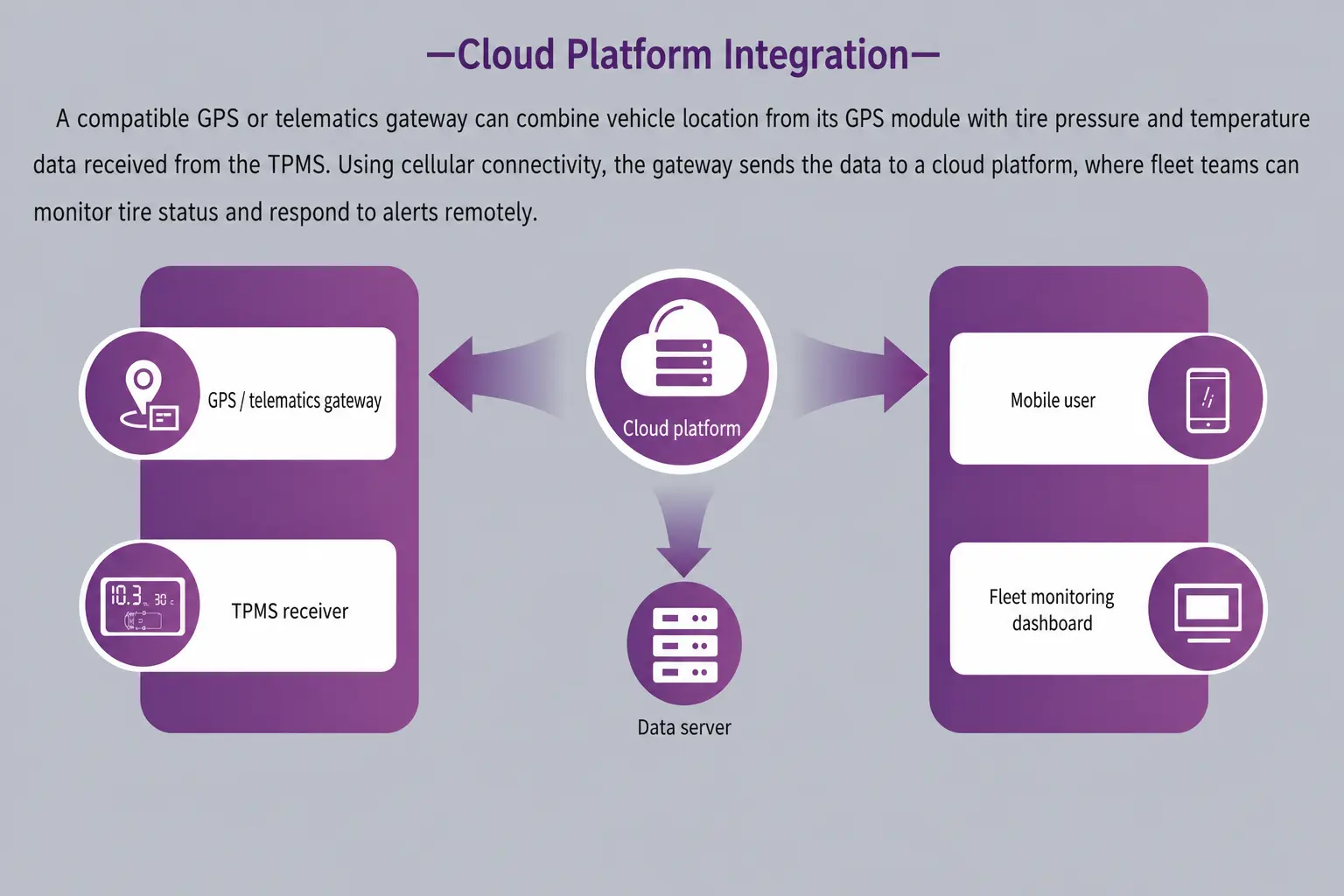
A TPMS fleet management system gives fleet operators centralized visibility into tire pressure and temperature across trucks, buses, trailers, and other commercial vehicles. Tire sensors send data to an onboard receiver, which can share it with a compatible GPS or telematics gateway. The gateway then combines TPMS data with vehicle location and sends it to a cloud platform for remote monitoring and alerts.
This connected approach helps fleet teams identify underinflation, overinflation, abnormal temperature, and rapid pressure loss earlier. It also replaces many isolated manual checks with a more consistent, data-based tire maintenance process.
Why Commercial Fleets Need Continuous Tire Monitoring
Commercial vehicle tires operate under heavy loads, long driving hours, changing road conditions, and wide temperature ranges. A tire can develop a problem after a pre-trip inspection, so a manual check alone cannot show what happens during the journey.
Incorrect tire pressure may increase heat buildup, accelerate uneven wear, raise rolling resistance, and increase the risk of tire damage or an unplanned stop. For fleet managers, one tire problem can affect driver safety, delivery schedules, maintenance costs, and vehicle availability.
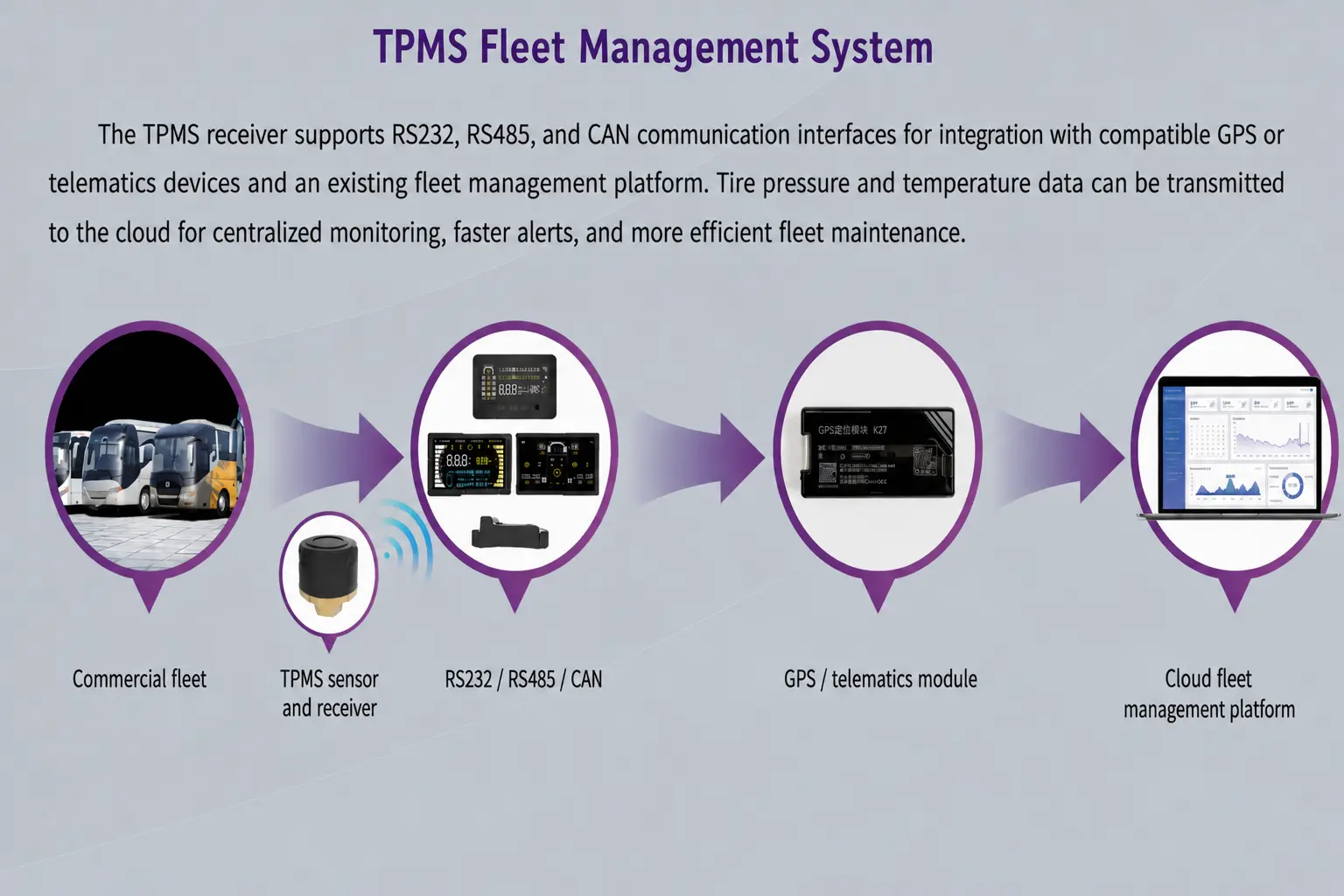
How a TPMS Fleet Management System Works
- Tire sensors measure pressure and temperature. Each sensor has a unique ID so its data can be associated with a specific tire position.
- An onboard TPMS receiver collects sensor data. The receiver displays or processes the readings and checks them against configured alert thresholds.
- A communication interface transfers the data. Depending on the integration, the receiver can connect through RS232, RS485, or CAN to a compatible GPS tracker, telematics gateway, or vehicle system.
- The telematics device supplies vehicle location and connectivity. GPS location comes from the vehicle gateway, not from the tire sensor. The gateway can transmit both location and TPMS data through a cellular network.
- A cloud platform presents the fleet view. Authorized users can review vehicle status, tire readings, and alerts from a dashboard instead of checking one vehicle at a time.
What Fleet Managers Can Monitor
- Current tire pressure and temperature for each configured wheel position
- Low-pressure, high-pressure, high-temperature, and rapid-leak alerts when supported by the selected configuration
- Vehicle location supplied by the connected GPS or telematics device
- Sensor IDs and tire-position assignments for maintenance records
- Historical tire data available through the connected platform
The exact dashboard functions depend on the receiver, gateway, communication protocol, and cloud platform used in the project. This distinction is important: a TPMS measures tire conditions, while a telematics system adds connectivity, location, data storage, and fleet-level reporting.
Key Benefits for Fleet Operations
Earlier response to tire abnormalities
Remote alerts help dispatchers or maintenance teams contact a driver and arrange an inspection before a tire condition becomes more serious. TPMS does not replace professional tire inspection, but it provides useful information between scheduled checks.
More consistent preventive maintenance
Historical pressure and temperature records can help maintenance teams identify repeated underinflation, abnormal heat, or recurring issues at a specific wheel position. This supports better inspection planning and more traceable maintenance decisions.
Support for tire life and fuel efficiency
Keeping tires within the vehicle or tire manufacturer’s recommended pressure range can reduce avoidable rolling resistance and uneven wear. Actual fuel and tire-life improvements vary by vehicle, load, route, driving behavior, tire condition, and maintenance practice, so results should be evaluated using fleet data rather than a fixed percentage claim.
Centralized visibility across mixed fleets
A connected platform can bring tire information from multiple vehicles into one interface. This is especially useful for fleets operating trucks with trailers, buses, or vehicles that spend long periods away from the depot.
Cloud Platform and Telematics Integration
The integration layer determines how TPMS data reaches the cloud. An Arvov receiver can provide data through communication interfaces such as RS232, RS485, or CAN, while the compatible GPS or telematics gateway handles vehicle location and cellular transmission. The gateway or fleet platform must be configured to parse the selected TPMS communication protocol.
For projects that already use a fleet platform, Arvov can provide the relevant communication protocol and discuss receiver or gateway integration requirements. See the RS232 and RS485 TPMS solution and the CAN bus TPMS solution for available connection approaches.
Choosing the Right TPMS Fleet Configuration
Before selecting hardware, define the vehicle types, maximum number of wheels, sensor style, tire pressure range, trailer operating pattern, communication interface, regional cellular requirements, and the platform that will receive the data. Fleets should also define alert thresholds and escalation procedures so every warning has a clear operational response.
For commercial vehicle applications, review Arvov’s truck TPMS options or contact the team with your receiver, gateway, and platform requirements.
Frequently Asked Questions
What does a TPMS fleet management system monitor?
It monitors tire pressure and temperature from installed TPMS sensors. When connected to a compatible telematics device and cloud platform, fleet users can also view vehicle location, tire-position data, alerts, and available history in one system.
Does the tire sensor provide GPS location?
No. The tire sensor measures tire conditions. Vehicle location is supplied by the connected GPS tracker or telematics gateway.
Can TPMS connect to an existing fleet platform?
Yes, when the receiver output, telematics gateway, and platform are technically compatible. Integration usually requires the platform or gateway developer to parse the TPMS communication protocol and map each sensor to the correct vehicle and wheel position.
Which communication interfaces are available?
Arvov offers TPMS integration options using RS232, RS485, and CAN. The correct interface depends on the vehicle system, telematics hardware, data protocol, and project requirements.
Can a TPMS fleet management system reduce operating costs?
It can support cost control by helping fleets respond earlier to tire abnormalities, maintain recommended inflation, reduce avoidable wear, and plan maintenance more consistently. Actual savings vary and should be measured against the fleet’s own operating data.
Build a Connected Tire Monitoring Solution
A well-designed TPMS fleet management system connects tire sensors, an onboard receiver, vehicle telematics, and a cloud platform without confusing the role of each component. The result is clearer tire visibility, faster alert handling, and better maintenance information for commercial fleet operations.
Contact Arvov to discuss vehicle types, wheel configurations, receiver interfaces, communication protocols, and cloud integration requirements for your fleet project.